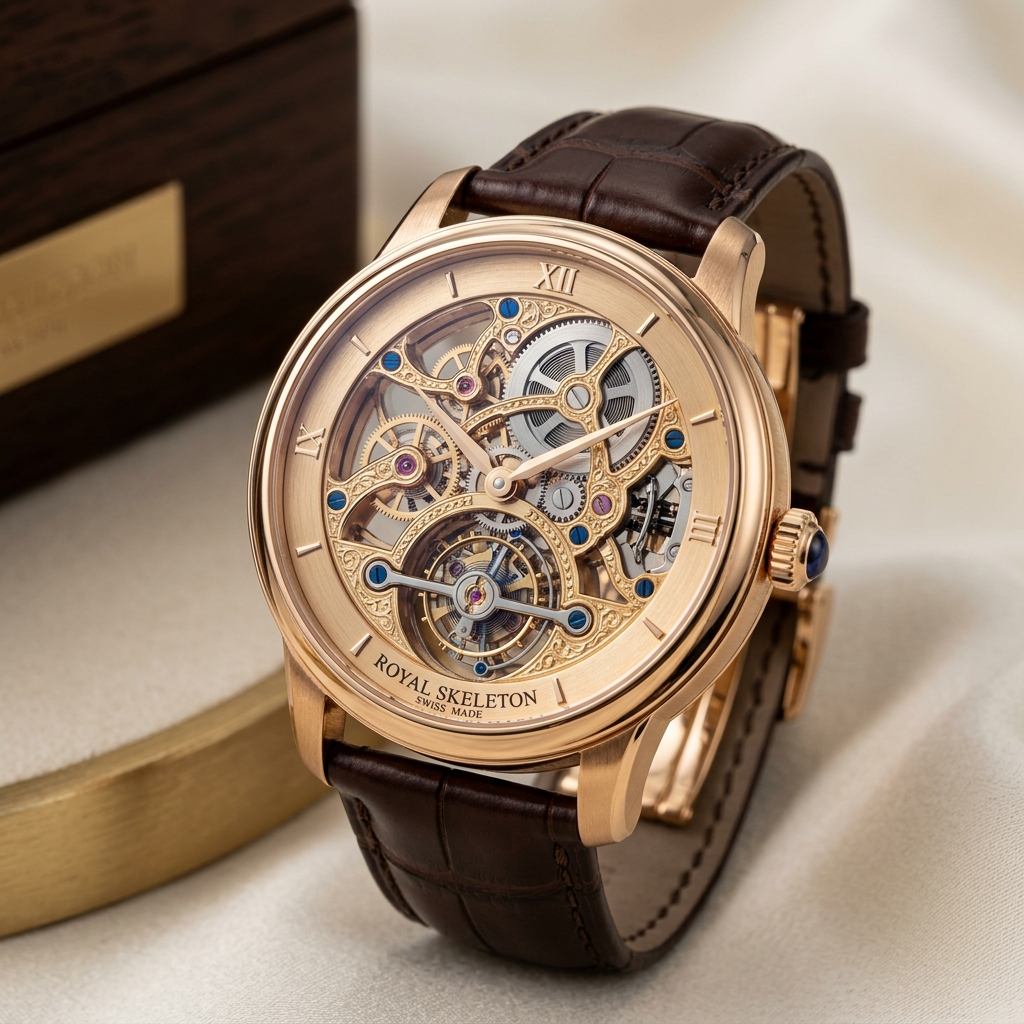
The Tourbillon stands as the pinnacle of watchmaking complexity. Invented by the legendary Abraham-Louis Breguet in 1795 and patented in 1801, this mesmerizing mechanism was designed to counter the disruptive effects of gravity on pocket watch movements.
Defying Gravity
Pocket watches were typically held vertically in waistcoats. This prolonged vertical orientation meant that gravity pulled on the delicate balance spring, causing minor inaccuracies. Breguet's genius was to house the escapement and balance wheel in a rotating cage that completes a full turn once per minute, averaging out positional errors.
"To construct a tourbillon is to master gravity. It requires components so light and precise they border on the weightless."
The Modern Tourbillon
In modern wristwatches, where the arm is constantly moving, the tourbillon is less about corrective utility and more about prestige, status, and artistic mastery. A tourbillon movement remains one of the most difficult horological complications to build and regulate, demanding weeks of custom assembly by master watchmakers.